
















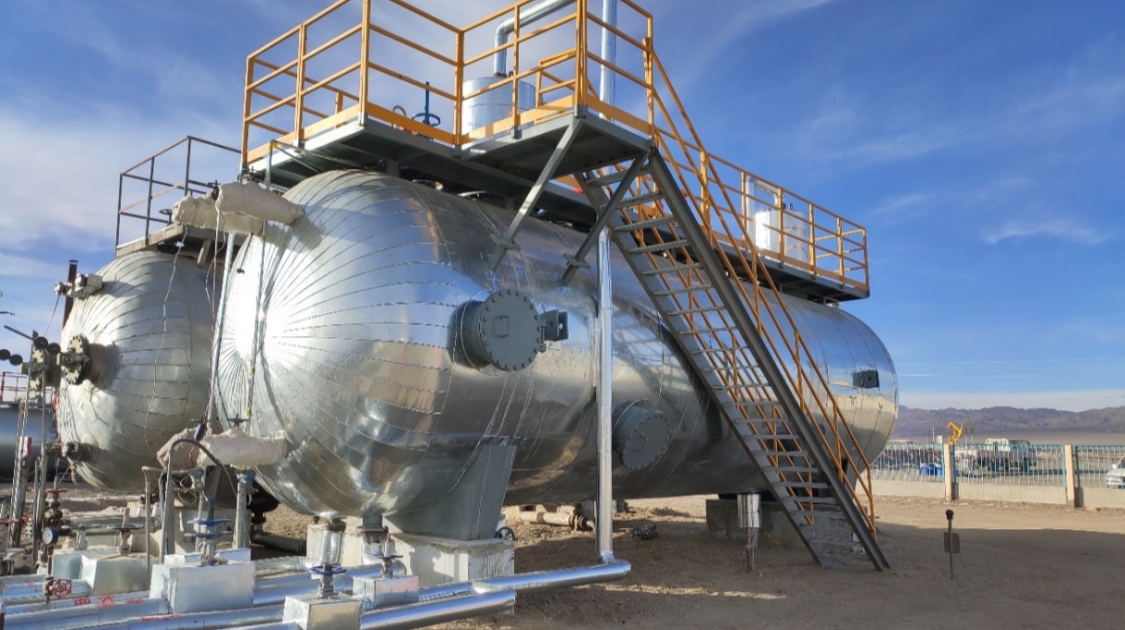
The three phase separator is a pressure vessel used to separate a mixed production stream into three phases: gas, oil or condensate, and produced water. It is widely used in upstream oil and gas production, well testing, gathering stations, early production facilities, and other process applications where hydrocarbons and water need to be handled separately.
What Is a Three Phase Separator
A three phase separator receives a multiphase fluid containing gas, hydrocarbon liquid, and water. The vessel creates controlled conditions that allow these components to separate according to their physical properties, especially density.
Gas, being the lightest phase, moves toward the upper section of the vessel. The liquid portion settles below it, with oil generally forming a layer above the denser produced water. Separate outlets then direct gas, oil, and water to downstream equipment.
This arrangement allows several separation functions to be performed in one pressure vessel, reducing the need for separate primary separation equipment.
3 Phase Separator Working Principle
The separation process begins when the incoming wellstream enters the vessel through an inlet device. Because the incoming fluid can have considerable velocity and turbulence, an inlet diverter or similar internal device is used to reduce momentum and distribute the flow.
As the fluid velocity decreases, free gas separates from the liquid and rises into the vapor space. A mist eliminator or demister can then remove entrained liquid droplets from the gas before it leaves through the gas outlet.
The remaining liquid is retained in the vessel for sufficient residence time. Gravity allows the oil and water to form separate layers. Level and interface control systems help maintain stable operating conditions so that oil and water can be discharged through their respective outlets.
Main Components of a Three Phase Separator
The performance of a three phase separator depends heavily on its internal design. Typical components include an inlet diverter, baffles, liquid settling section, demister pad, oil-water interface control, level instruments, pressure controls, and separate outlet connections.
The inlet device is particularly important because excessive turbulence can disturb the oil-water interface and reduce separation quality. Baffles or coalescing elements may be incorporated to improve flow distribution and encourage small liquid droplets to combine and settle.
At the gas outlet, a demister helps capture liquid droplets carried by the gas stream. The vessel may also incorporate pressure relief and instrumentation systems appropriate to the operating service.
Horizontal vs. Vertical Three Phase Separator
Three phase separators are commonly designed in horizontal or vertical configurations.
Horizontal separators provide a relatively large liquid surface area and are commonly considered when liquid handling capacity and oil-water separation are important. Their geometry provides space for the liquid phases to settle while allowing gas to move through the upper section.
Vertical separators can be advantageous where floor space is limited or where the process has a relatively high gas-to-liquid ratio. The final choice depends on flow rates, fluid properties, available space, separation requirements, and project conditions.
Therefore, orientation should be selected from process calculations rather than simply based on equipment appearance or footprint.
3 Phase Separator Design
A properly designed separator needs to match the actual characteristics of the production stream. Important parameters normally include:
- Gas, oil, and water flow rates
- Operating and design pressure
- Operating temperature
- Gas-to-oil ratio
- Water cut
- Fluid density and viscosity
- Required residence time
- Oil-water density difference
- Droplet size and separation target
- Sand or solid content
- Corrosion and material requirements
Separator sizing is therefore not simply a matter of selecting a larger vessel. An undersized vessel can increase gas carry-under, liquid carry-over, and unstable interface conditions, while excessive sizing can increase equipment cost, weight, and installation footprint.
Applications of Three Phase Separators
The three phase separator is particularly valuable in oil and gas facilities where produced fluids arrive at the surface as a mixture. Typical applications include:
- Oil and gas production facilities
- Well testing systems
- Early production facilities
- Oil and gas gathering stations
- Flowback and well cleanup operations
- Multiphase flow measurement
- Offshore and onshore production systems
- Produced-water handling systems
For well testing, the separator can provide individual gas, oil, and water streams that can be measured and routed separately. Some specialized systems are also designed for high-pressure service and challenging environments.
Guide of Three Phase Separator Selection
When selecting a three phase separator, buyers should provide the manufacturer with detailed process information rather than only specifying vessel volume.
The most important starting point is the expected operating envelope: maximum and minimum flow rates, pressure, temperature, fluid composition, water cut, gas-oil ratio, and required separation performance.
The separator’s mechanical design should also match the service environment. Material selection, corrosion protection, pressure rating, instrumentation, safety devices, and applicable design or fabrication standards should be considered as part of the complete equipment specification.
For sour-service applications, for example, material and manufacturing requirements may need to address hydrogen sulfide exposure and applicable sour-service standards.
Conclusion
A three phase separator is more than a simple storage vessel. It is a process pressure vessel designed to create stable conditions for separating gas, hydrocarbon liquid, and produced water before these streams enter downstream equipment.
Its effectiveness depends on the complete engineering package: vessel geometry, inlet design, internal components, residence time, oil-water interface control, pressure management, and the actual properties of the production fluid.
For a new project or replacement system, providing accurate process data to the separator manufacturer is the best starting point. A process-specific design can then be developed around the required flow capacity, pressure, temperature, fluid characteristics, separation target, and installation conditions.